









Edge AI vs. Server AI: How Smarter Cameras Are Eradicating False Alarms
Remember the early days of smart home cameras? A stray leaf blowing across the porch, a passing cloud changing the shadows, or a neighborhood cat strolling by would trigger an immediate, frantic smartphone alert. This constant barrage led to "notification fatigue," causing users to mute their security apps entirely—defeating the purpose of having a camera. Thanks to the rapid evolution of Artificial Intelligence, those days are gone. But behind the scenes, a major architectural battle is being waged: Edge AI vs. Cloud/Server AI.
The Breakdown
1. What is Edge AI?
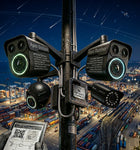
Edge AI means the "brain" is built right into the camera chassis. The silicon chips inside the camera are powerful enough to analyze incoming pixels in real-time without sending them away.
-
Speed and Privacy: Because the data is processed locally, the camera can detect a human, vehicle, or pet in milliseconds and ping your phone immediately. Furthermore, your private video doesn't need to travel across the internet for analysis, protecting your digital privacy.
2. What is Server/Cloud AI?
Server-based AI relies on the camera acting as a "dumb eye" that simply records and ships the raw video up to a massive cloud data center. The cloud servers do the heavy computational lifting and send the verdict back to your phone.
-
The Bottleneck: While cloud servers can run highly complex algorithms (like specific facial recognition or deep behavioral analytics), they suffer from latency. If your Wi-Fi is sluggish, an intruder could be halfway through your home before the cloud server processes the video and sends an alert.
Conclusion
As on-device processors grow more efficient, Edge AI is rapidly becoming the gold standard for residential and commercial security. By analyzing video right at the source, modern cameras drastically cut down on latency, slash internet bandwidth consumption, and finally make false alarms a thing of the past.