





FAQs
Our products solve real problems with clean design and honest materials.
1. What is the difference between wireless and wire-free security cameras?
Wireless cameras transmit their video signal over Wi-Fi, but they still require a physical power cable plugged into an electrical outlet to function.
Wire-free cameras are completely untethered. They run on rechargeable batteries or solar power and transmit data via Wi-Fi, making them incredibly easy to install anywhere.
2. Do security cameras record all the time or only when they detect motion?
It depends on the camera and your settings. Most modern smart cameras rely on motion-activated recording to save battery life and storage space. However, many wired systems (like NVR/DVR systems) or premium plug-in Wi-Fi cameras offer 24/7 continuous video recording (CVR).
3. Can security cameras work without internet/Wi-Fi?
Yes, they can. While you will lose "smart" features like real-time phone alerts and remote live-viewing, many cameras can record locally to an SD card, hard drive, or a dedicated local network (like a traditional CCTV system) without an active internet connection.
4. Where is my recorded footage stored, and is it secure?
Footage is typically stored in one of two ways:
- Cloud Storage: Video is encrypted and sent to a secure online server. This often requires a monthly subscription but ensures your footage is safe even if the camera is stolen.
- Local Storage: Video is saved directly to a microSD card in the camera or a local hard drive. There are no monthly fees, but if someone steals the device, they take the footage with them.
5. How much internet bandwidth do Wi-Fi cameras use?
A single security camera generally uses between 1 Mbps and 4 Mbps of upload speed when actively streaming or uploading high-definition (1080p or 4K) video to the cloud. If you have multiple cameras on a weak home network, it can cause temporary slowdowns.
6. Do security cameras work in total darkness?
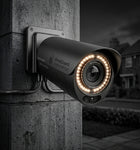
Yes, most modern security cameras are equipped with Infrared (IR) Night Vision, which allows them to see in pitch-black conditions (rendering the image in black and white). Many newer models also feature built-in spotlights to provide full-color night vision.
7. How long do the batteries last in wire-free cameras?
On average, battery-powered cameras last anywhere from 2 to 6 months on a single charge. This timeline varies wildly depending on how often the camera is triggered by motion, how cold the weather is, and your specific live-view habits.
8. Can my security camera system be hacked?
Any device connected to the internet carries a small risk. However, you can significantly minimize this threat by changing the camera's default password immediately, enabling Two-Factor Authentication (2FA) on your account, and keeping the camera’s firmware updated.